
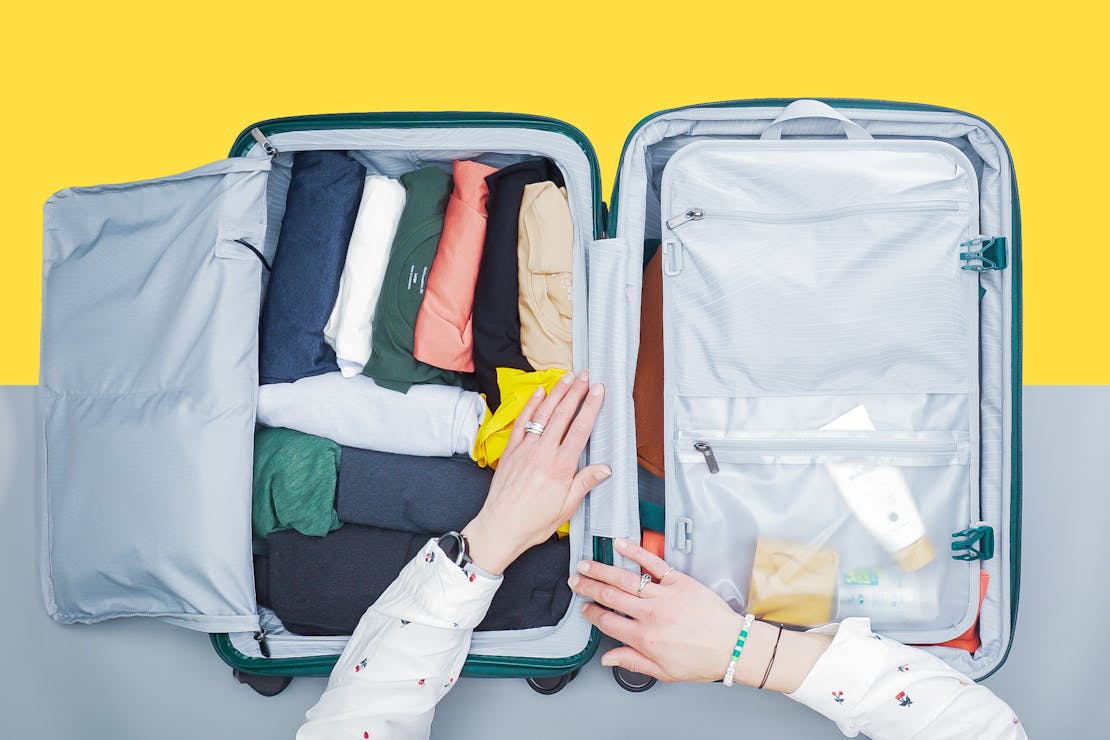
The nesting method: pack your small suitcase first, then slide it into an empty larger one.
International travel in 2026 comes with a very real problem — airline baggage fees keep going up, carry-on enforcement is stricter than ever, and somehow your "light packing" still ends up weighing 22kg by the time you're at the gate.
The good news? There's a dead-simple travel hack called the suitcase nesting method that frequent fliers, travel professionals, and even shopping-obsessed backpackers swear by. It lets you fly out with one checked bag and return with two — paying for just one.
This guide breaks down exactly how to do it right for 2026 international trips, what to watch out for, and how to squeeze maximum value out of every cubic centimeter of that checked allowance.
What Is the Suitcase Nesting Method?
The concept is simple. You pack all your travel essentials into a smaller suitcase — let's say a carry-on sized bag. Then you place that packed carry-on inside a larger, empty checked suitcase. You check only the large suitcase. One bag fee. Two bags travel.
When you arrive at your destination, you pull the smaller suitcase out and use it independently for your hotel stays, day trips, or city hopping. The larger suitcase sits empty and waiting — ready to swallow every souvenir, coat, or extra pair of shoes you pick up.
"This is one of my favorite travel hacks. It's simple and makes a huge difference when you know you'll be doing some local shopping. It's especially great if you're flying with an airline that only allows one checked bag."
— Nour Shell, Social Coordinator, Intrepid Travel North America
The method was first popularized through travel forums and eventually went viral on TikTok. But beyond the social buzz, it's backed by real-world logic that any budget-conscious traveler can appreciate.
Why This Hack Matters More in 2026
Airline baggage fees are not getting friendlier. American Airlines, for example, raised its second checked bag fee to $50 for tickets issued after February 18, 2026 — up from $45 the previous year. And that's just for domestic routes. International baggage rules vary wildly.
Meanwhile, airlines are shifting toward a stricter universal carry-on standard of 22 x 14 x 9 inches in 2026, including wheels and handles in the measurements. Many bags that were previously fine at the gate are now getting flagged. The margin for error is shrinking.
In this environment, the nesting method gives you a clever escape hatch. You depart with one checked bag, travel light on the way out, and use that second suitcase capacity for your return — without paying twice.
Step-by-Step: How to Nest a Suitcase Properly
Doing this wrong can damage your wheels, crack your hard-shell, or get you hit with an overweight fee at check-in. Here's how to do it right.
Choose the right size combination. Your inner suitcase needs to fit comfortably inside the outer one with the zipper closed. A standard carry-on (typically 21–22 inches) fits well inside a 28–30 inch checked bag. Don't force it — if it's a tight squeeze, your outer bag may not close properly or may exceed size limits.
Pack your inner suitcase first. Fill it with everything you actually need for the trip — clothes, toiletries, chargers, and essentials. Roll clothes to save space. Use packing cubes if you like organization. Keep the inner bag at a reasonable weight since it adds to your total checked bag weight.
Place the inner suitcase upside down inside the outer bag. This is the crucial tip that TikTok travel creator @erica.lee made viral. Place the smaller luggage upside down so the wheels face up, not down. If the wheels sit at the bottom, the weight of the inner bag can crush or damage the rubber on the wheels during transit.
Fill the gaps around the inner suitcase. Don't waste that space. Stuff socks, scarves, lightweight jackets, or travel accessories into the gaps around your smaller bag. Every centimeter of free space is a centimeter you'll regret not using.
Weigh the combined bag before you leave home. This is non-negotiable. The combined weight of both suitcases plus everything you've stuffed in must stay within your airline's checked bag limit — typically 23kg (50 lbs) in economy. A $50 overweight fee defeats the whole purpose.
Check in normally at the airport. As long as your outer bag meets the size and weight limits, no one will open it to check what's inside. Nesting luggage is completely legal and common practice.

Pack your smaller bag fully, then nest it inside an empty large suitcase before check-in.
The Reverse Nesting Method — For Small Apartments and Frequent Shoppers
There's a clever variation worth knowing if you use collapsible luggage. The reverse nesting method involves storing a collapsible carry-on inside a larger suitcase — the way you'd normally keep suitcases at home. When you travel, the collapsed bag fits on one side of the outer suitcase, leaving the other side completely free for items you brought with you.
This works especially well if you have a brand like Rollink, whose collapsible carry-ons flatten down to about 5 inches wide. You fly out with one checked bag that technically contains a second bag — but since that second bag is collapsed, it takes up barely any room.
Arriving in New York, London, or Tokyo? Expand your carry-on, use it for daily city exploration, then let the large suitcase handle all your shopping haul on the way home. Clean, logical, no drama.
What Luggage Works Best for Nesting?
Not every pair of suitcases will nest cleanly. Here's what to look for.
Soft-Shell vs. Hard-Shell
Soft-shell suitcases are far more forgiving for nesting. They compress slightly, making it easier to zip the outer bag shut even with a fully packed inner bag inside. Hard-shell suitcases are rigid, which means the size difference between inner and outer needs to be more precise — otherwise you simply can't close it.
If you're buying new luggage specifically for this purpose, a soft carry-on inner bag inside a hard-shell checked bag is a solid combination.
Size Combinations That Actually Work
The sweet spot most travelers find: a 20–22 inch carry-on fitting into a 28–30 inch checked bag. You'll typically have a few inches of clearance on each side — enough to pack essentials around the inner bag, not so much that the inner bag slides around during handling.
Some luggage brands specifically design sets to nest. Away Luggage, Samsonite, and Delsey all offer matching sets where the smaller piece fits cleanly inside the larger one. If you already own both bags, test the fit at home with the inner bag fully packed — not empty.
Collapsible Luggage
Brands like Rollink have changed the game here. Collapsible suitcases can fold down to just 5 inches wide, making them easy to store inside a standard large suitcase with plenty of room to spare. They're lightweight, TSA-friendly, and purpose-built for exactly this kind of trip planning.
The Honest Pros and Cons
Let's not pretend this hack is perfect for everyone. Here's the real picture.
✅ Advantages
- Save on second bag fees (up to $50–$100+ each way)
- Arrive with only one bag to handle at the airport
- Extra capacity for return journey shopping
- Completely legal — no airline restrictions
- Ideal for trips involving planned shopping or souvenir hauls
❌ Drawbacks
- Requires packing very light on the way out
- Combined weight must stay under the limit
- Access to inner bag is inconvenient during transit
- You'll need to manage two bags on your return trip
- Doesn't work if your airline only allows one piece
Critical Things to Check Before You Fly
The nesting method works best when your airline allows two pieces of checked luggage. But many international routes — particularly economy fares on budget carriers — only allow one. If that's the case, you won't actually gain anything by nesting, since you'll still pay the same fees.
Baggage fees and rules vary significantly based on business model, route profitability, aircraft type, and competitive positioning. Budget carriers charge for nearly everything, while full-service airlines include more generous allowances on long-haul international routes.
Before you pack, confirm:
- How many checked bags does your ticket include?
- What is the per-bag weight limit (usually 23kg/50 lbs)?
- What are the size restrictions for checked bags?
- Are there specific rules for your destination country?
For example, American Airlines allows two free checked bags when flying to or from Japan, South Korea, and China, but only one bag when traveling between the USA and Mexico. Route matters. A lot.
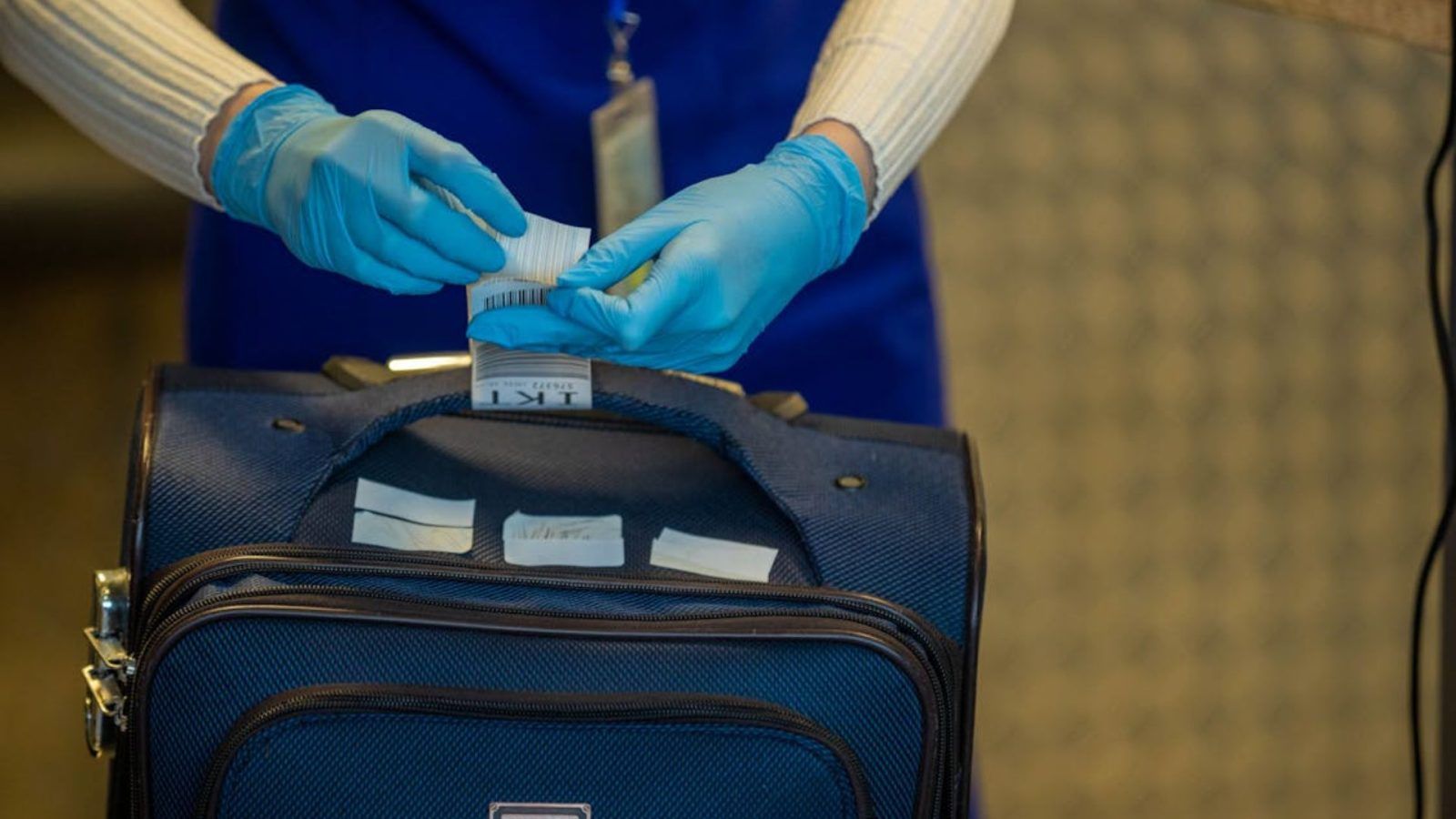
Always verify your airline's carry-on and checked bag rules before departure — they change regularly.
Packing Light Enough to Make This Work
The nesting method demands something uncomfortable: genuine minimalism on the way out.
If your carry-on is stuffed with eight outfits, three pairs of shoes, and "just in case" items, the total weight of both bags is going to blow past the 23kg limit before you've added the outer suitcase itself. A quality 28-inch hard-shell suitcase can weigh 5–6kg on its own. Add a packed carry-on at 8–10kg inside, and you're already at the limit with nothing extra packed around it.
The golden rule: pack for the trip you're actually taking, not the trip you imagine having. Use the 5-4-3-2-1 rule — five sets of socks and underwear, four tops, three bottoms, two pairs of shoes, one jacket. Wear your heaviest items on the plane. Laundry facilities exist in most countries.
The whole point of nesting is that you're sacrificing outbound packing space for return journey capacity. Make that trade consciously and it pays off. Make it reluctantly and you end up with a 27kg bag and a very unpleasant conversation at check-in.
When Nesting Doesn't Make Sense
There are situations where you're better off skipping the nesting method altogether.
If you're on a strict budget airline with one-bag-only rules (think Ryanair in Europe or certain Spirit fares), nesting won't help — you'll still pay for the return bag. If you're traveling for business and need a full wardrobe both ways, packing light enough to nest isn't realistic.
And if you're visiting multiple cities with fast transitions between hotels, handling two suitcases on your return through train stations and city metros is going to feel like punishment.
For those situations, luggage storage services like Radical Storage new york can be a smarter alternative — drop your large bag at a storage point, explore the city with just your carry-on, and pick it up before your next leg.
The Bottom Line for 2026 International Travelers
Smart Nesting, Done Right
The suitcase nesting method is one of the most practical, underused packing hacks for international travel in 2026. When done correctly — right size combination, wheels facing up, weight checked at home, and airline rules verified — it genuinely saves you money and solves the classic "I bought too much" problem every traveler knows too well.
Pack light on the way out. Shop freely on the way in. Pay for one bag. Travel like you know what you're doing. And if the big suitcase needs somewhere to wait while you explore — Radical Storage in New York has you covered.
The nesting method: pack your small suitcase first, then slide it into an empty larger one.
International travel in 2026 comes with a very real problem — airline baggage fees keep going up, carry-on enforcement is stricter than ever, and somehow your "light packing" still ends up weighing 22kg by the time you're at the gate.
The good news? There's a dead-simple travel hack called the suitcase nesting method that frequent fliers, travel professionals, and even shopping-obsessed backpackers swear by. It lets you fly out with one checked bag and return with two — paying for just one.
This guide breaks down exactly how to do it right for 2026 international trips, what to watch out for, and how to squeeze maximum value out of every cubic centimeter of that checked allowance.
What Is the Suitcase Nesting Method?
The concept is simple. You pack all your travel essentials into a smaller suitcase — let's say a carry-on sized bag. Then you place that packed carry-on inside a larger, empty checked suitcase. You check only the large suitcase. One bag fee. Two bags travel.
When you arrive at your destination, you pull the smaller suitcase out and use it independently for your hotel stays, day trips, or city hopping. The larger suitcase sits empty and waiting — ready to swallow every souvenir, coat, or extra pair of shoes you pick up.
"This is one of my favorite travel hacks. It's simple and makes a huge difference when you know you'll be doing some local shopping. It's especially great if you're flying with an airline that only allows one checked bag."
— Nour Shell, Social Coordinator, Intrepid Travel North America
The method was first popularized through travel forums and eventually went viral on TikTok. But beyond the social buzz, it's backed by real-world logic that any budget-conscious traveler can appreciate.
Why This Hack Matters More in 2026
Airline baggage fees are not getting friendlier. American Airlines, for example, raised its second checked bag fee to $50 for tickets issued after February 18, 2026 — up from $45 the previous year. And that's just for domestic routes. International baggage rules vary wildly.
Meanwhile, airlines are shifting toward a stricter universal carry-on standard of 22 x 14 x 9 inches in 2026, including wheels and handles in the measurements. Many bags that were previously fine at the gate are now getting flagged. The margin for error is shrinking.
In this environment, the nesting method gives you a clever escape hatch. You depart with one checked bag, travel light on the way out, and use that second suitcase capacity for your return — without paying twice.
Step-by-Step: How to Nest a Suitcase Properly
Doing this wrong can damage your wheels, crack your hard-shell, or get you hit with an overweight fee at check-in. Here's how to do it right.
Choose the right size combination. Your inner suitcase needs to fit comfortably inside the outer one with the zipper closed. A standard carry-on (typically 21–22 inches) fits well inside a 28–30 inch checked bag. Don't force it — if it's a tight squeeze, your outer bag may not close properly or may exceed size limits.
Pack your inner suitcase first. Fill it with everything you actually need for the trip — clothes, toiletries, chargers, and essentials. Roll clothes to save space. Use packing cubes if you like organization. Keep the inner bag at a reasonable weight since it adds to your total checked bag weight.
Place the inner suitcase upside down inside the outer bag. This is the crucial tip that TikTok travel creator @erica.lee made viral. Place the smaller luggage upside down so the wheels face up, not down. If the wheels sit at the bottom, the weight of the inner bag can crush or damage the rubber on the wheels during transit.
Fill the gaps around the inner suitcase. Don't waste that space. Stuff socks, scarves, lightweight jackets, or travel accessories into the gaps around your smaller bag. Every centimeter of free space is a centimeter you'll regret not using.
Weigh the combined bag before you leave home. This is non-negotiable. The combined weight of both suitcases plus everything you've stuffed in must stay within your airline's checked bag limit — typically 23kg (50 lbs) in economy. A $50 overweight fee defeats the whole purpose.
Check in normally at the airport. As long as your outer bag meets the size and weight limits, no one will open it to check what's inside. Nesting luggage is completely legal and common practice.
Pack your smaller bag fully, then nest it inside an empty large suitcase before check-in.
The Reverse Nesting Method — For Small Apartments and Frequent Shoppers
There's a clever variation worth knowing if you use collapsible luggage. The reverse nesting method involves storing a collapsible carry-on inside a larger suitcase — the way you'd normally keep suitcases at home. When you travel, the collapsed bag fits on one side of the outer suitcase, leaving the other side completely free for items you brought with you.
This works especially well if you have a brand like Rollink, whose collapsible carry-ons flatten down to about 5 inches wide. You fly out with one checked bag that technically contains a second bag — but since that second bag is collapsed, it takes up barely any room.
Arriving in New York, London, or Tokyo? Expand your carry-on, use it for daily city exploration, then let the large suitcase handle all your shopping haul on the way home. Clean, logical, no drama.
What Luggage Works Best for Nesting?
Not every pair of suitcases will nest cleanly. Here's what to look for.
Soft-Shell vs. Hard-Shell
Soft-shell suitcases are far more forgiving for nesting. They compress slightly, making it easier to zip the outer bag shut even with a fully packed inner bag inside. Hard-shell suitcases are rigid, which means the size difference between inner and outer needs to be more precise — otherwise you simply can't close it.
If you're buying new luggage specifically for this purpose, a soft carry-on inner bag inside a hard-shell checked bag is a solid combination.
Size Combinations That Actually Work
The sweet spot most travelers find: a 20–22 inch carry-on fitting into a 28–30 inch checked bag. You'll typically have a few inches of clearance on each side — enough to pack essentials around the inner bag, not so much that the inner bag slides around during handling.
Some luggage brands specifically design sets to nest. Away Luggage, Samsonite, and Delsey all offer matching sets where the smaller piece fits cleanly inside the larger one. If you already own both bags, test the fit at home with the inner bag fully packed — not empty.
Collapsible Luggage
Brands like Rollink have changed the game here. Collapsible suitcases can fold down to just 5 inches wide, making them easy to store inside a standard large suitcase with plenty of room to spare. They're lightweight, TSA-friendly, and purpose-built for exactly this kind of trip planning.
The Honest Pros and Cons
Let's not pretend this hack is perfect for everyone. Here's the real picture.
✅ Advantages
- Save on second bag fees (up to $50–$100+ each way)
- Arrive with only one bag to handle at the airport
- Extra capacity for return journey shopping
- Completely legal — no airline restrictions
- Ideal for trips involving planned shopping or souvenir hauls
❌ Drawbacks
- Requires packing very light on the way out
- Combined weight must stay under the limit
- Access to inner bag is inconvenient during transit
- You'll need to manage two bags on your return trip
- Doesn't work if your airline only allows one piece
Critical Things to Check Before You Fly
The nesting method works best when your airline allows two pieces of checked luggage. But many international routes — particularly economy fares on budget carriers — only allow one. If that's the case, you won't actually gain anything by nesting, since you'll still pay the same fees.
Baggage fees and rules vary significantly based on business model, route profitability, aircraft type, and competitive positioning. Budget carriers charge for nearly everything, while full-service airlines include more generous allowances on long-haul international routes.
Before you pack, confirm:
- How many checked bags does your ticket include?
- What is the per-bag weight limit (usually 23kg/50 lbs)?
- What are the size restrictions for checked bags?
- Are there specific rules for your destination country?
For example, American Airlines allows two free checked bags when flying to or from Japan, South Korea, and China, but only one bag when traveling between the USA and Mexico. Route matters. A lot.
Always verify your airline's carry-on and checked bag rules before departure — they change regularly.
Packing Light Enough to Make This Work
The nesting method demands something uncomfortable: genuine minimalism on the way out.
If your carry-on is stuffed with eight outfits, three pairs of shoes, and "just in case" items, the total weight of both bags is going to blow past the 23kg limit before you've added the outer suitcase itself. A quality 28-inch hard-shell suitcase can weigh 5–6kg on its own. Add a packed carry-on at 8–10kg inside, and you're already at the limit with nothing extra packed around it.
The golden rule: pack for the trip you're actually taking, not the trip you imagine having. Use the 5-4-3-2-1 rule — five sets of socks and underwear, four tops, three bottoms, two pairs of shoes, one jacket. Wear your heaviest items on the plane. Laundry facilities exist in most countries.
The whole point of nesting is that you're sacrificing outbound packing space for return journey capacity. Make that trade consciously and it pays off. Make it reluctantly and you end up with a 27kg bag and a very unpleasant conversation at check-in.
When Nesting Doesn't Make Sense
There are situations where you're better off skipping the nesting method altogether.
If you're on a strict budget airline with one-bag-only rules (think Ryanair in Europe or certain Spirit fares), nesting won't help — you'll still pay for the return bag. If you're traveling for business and need a full wardrobe both ways, packing light enough to nest isn't realistic.
And if you're visiting multiple cities with fast transitions between hotels, handling two suitcases on your return through train stations and city metros is going to feel like punishment.
For those situations, luggage storage services like Radical Storage new york can be a smarter alternative — drop your large bag at a storage point, explore the city with just your carry-on, and pick it up before your next leg.
The Bottom Line for 2026 International Travelers
Smart Nesting, Done Right
The suitcase nesting method is one of the most practical, underused packing hacks for international travel in 2026. When done correctly — right size combination, wheels facing up, weight checked at home, and airline rules verified — it genuinely saves you money and solves the classic "I bought too much" problem every traveler knows too well.
Pack light on the way out. Shop freely on the way in. Pay for one bag. Travel like you know what you're doing. And if the big suitcase needs somewhere to wait while you explore — Radical Storage in New York has you covered.